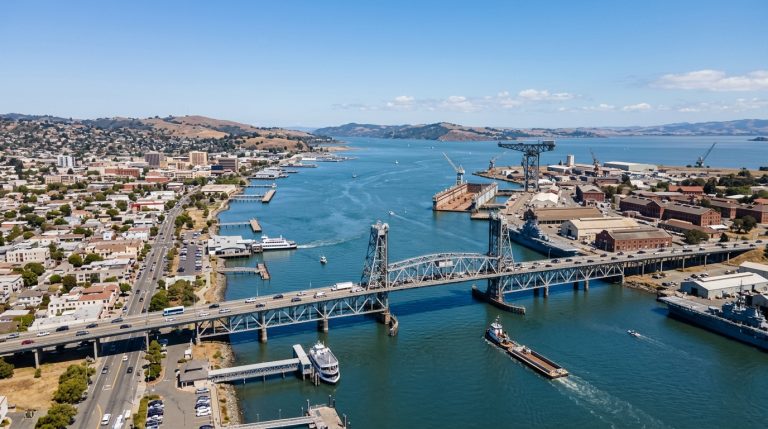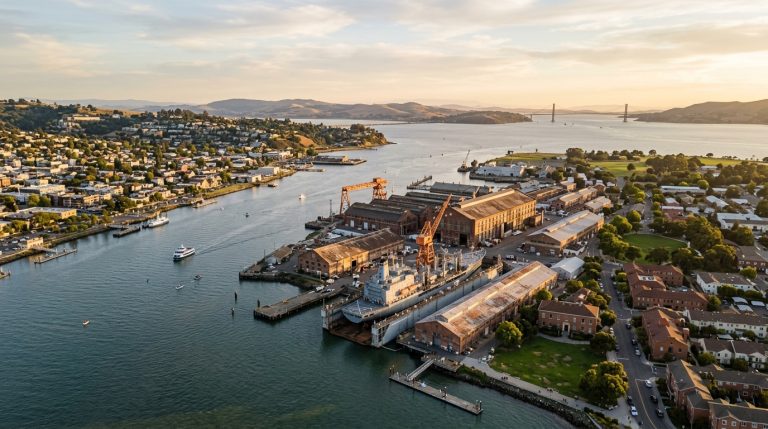
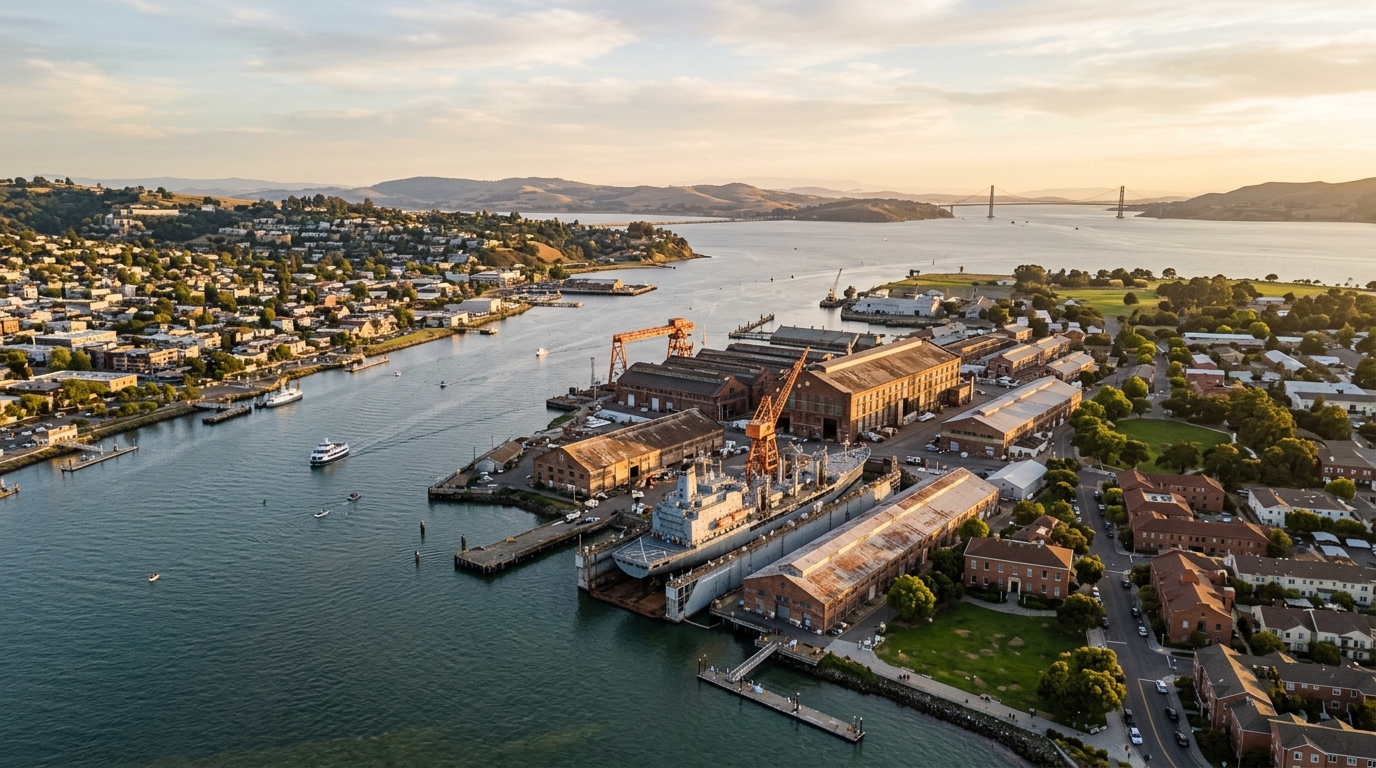
Mare Island has been part of Vallejo’s identity for generations. Its former naval shipyard, historic buildings, waterfront, industrial spaces, existing neighborhoods, and open land create a place unlike almost anywhere else in the Bay Area. Now, Mare Island is once again at the center of one of Vallejo’s biggest development conversations.
The proposed Mare Island Specific Plan update is not a small infill project. The current draft submitted by the Mare Island Company envisions nine connected neighborhoods and a mix of housing, employment, open space, transportation improvements, historic preservation, and new community amenities.
According to the City of Vallejo’s Mare Island Specific Plan page, the draft land-use plan is estimated to accommodate as many as 14,000 homes and approximately 14,900 to 17,000 jobs. Those figures describe long-range planning capacity rather than homes and jobs that have already been approved or scheduled for construction.
That distinction matters. Mare Island’s transformation will not happen overnight, and the plan is still being reviewed and revised. Infrastructure, environmental analysis, financing, transportation, historic resources, and community feedback all remain important parts of the process.
Still, the scale makes Mare Island redevelopment one of the most important Vallejo stories to follow in 2026.
What Is Actually Being Planned for Mare Island?
Mare Island’s current Specific Plan dates back to the years following the closure of the naval shipyard. Vallejo is now working with the Mare Island Company on a comprehensive update intended to create a new long-term framework for the island.
The concept attempts to move beyond the idea of Mare Island as one enormous development site. Instead, the draft divides future growth into nine neighborhoods with different development patterns and character. The City says those neighborhoods are intended to draw inspiration from Mare Island’s history and ecology while becoming more connected, walkable, diverse, and resilient.
Nine Neighborhoods Could Create a More Complete Community
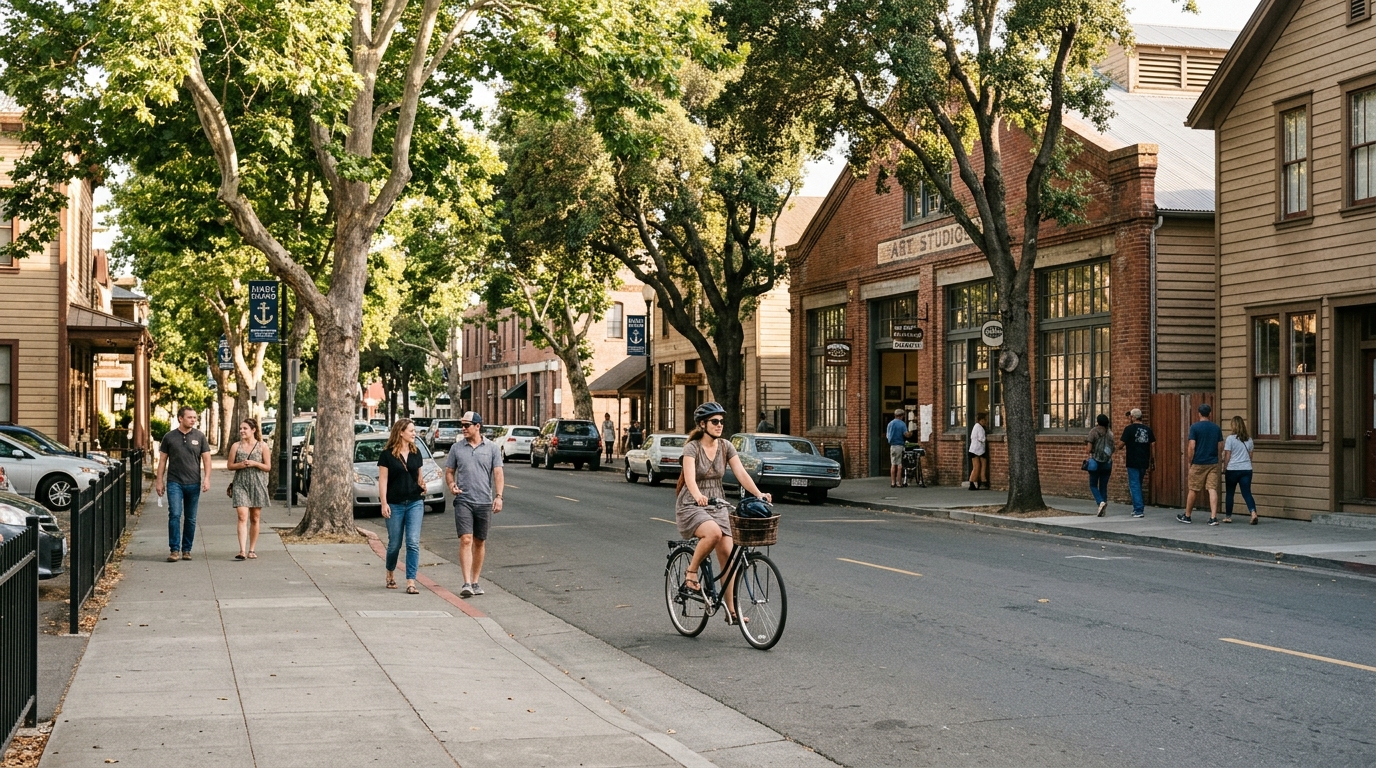
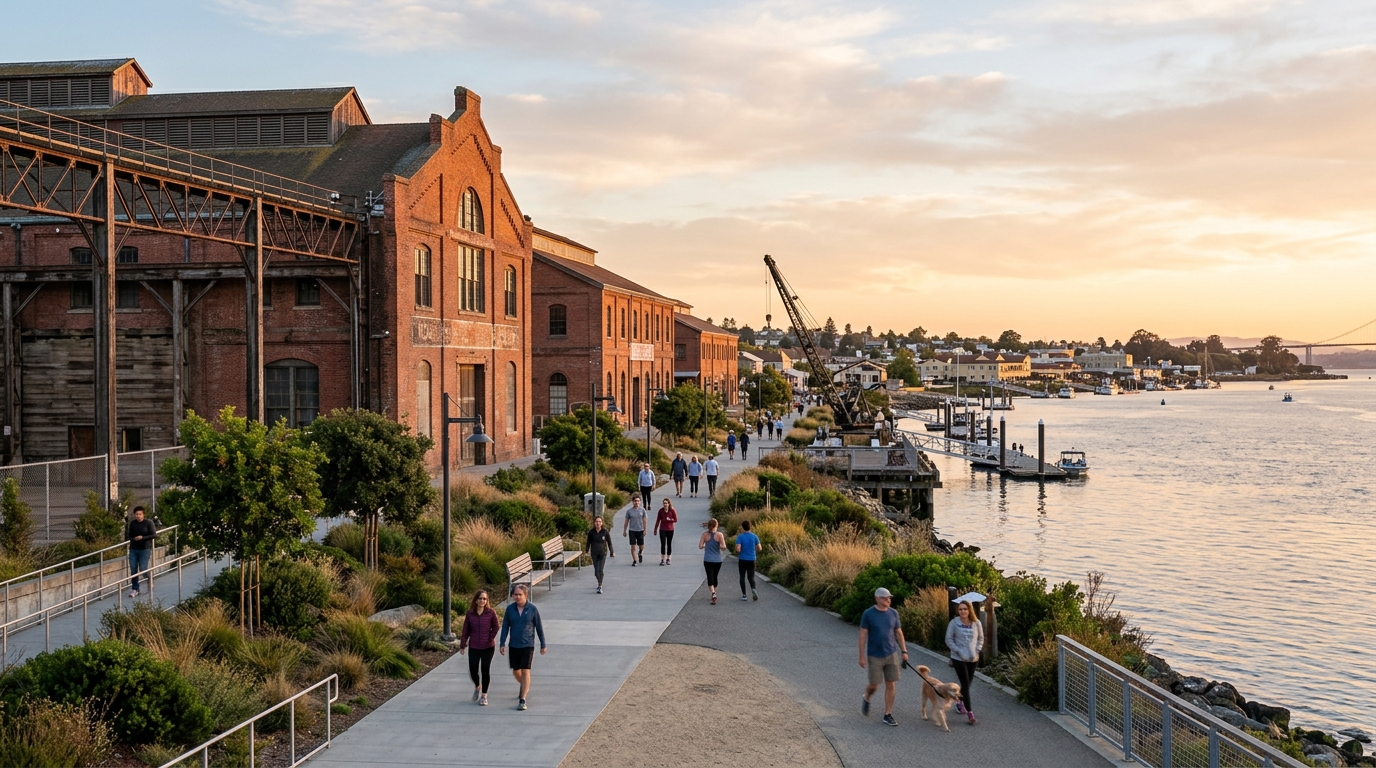
The neighborhood approach is significant because Mare Island already contains many different environments. Some areas feel residential. Others retain a strong industrial or maritime identity. Historic officers’ homes and significant naval buildings sit alongside warehouses, businesses, open landscapes, waterfront spaces, and undeveloped land.
A successful plan cannot treat all of those places the same way.
Housing Could Become a Much Larger Part of Mare Island
The draft planning capacity of up to 14,000 homes would represent a major change for Mare Island and Vallejo. The City also identifies a greater variety of housing types as one of the plan’s objectives.
However, the 14,000-home figure should not be interpreted as an immediate construction schedule. Planning capacity establishes what a long-term land-use framework may accommodate. Individual development phases still depend on approvals, environmental review, infrastructure, market conditions, financing, and other requirements.
Some residential development is moving on a separate track. Vallejo’s Coral Sea Village project involves plans for 68 detached single-family residences and 28 multifamily units within a previously approved subdivision. That project illustrates how Mare Island’s future will likely arrive through multiple developments and phases rather than one massive construction event.
More residents could eventually create demand for restaurants, neighborhood services, recreation, transportation, and everyday businesses. Visitors can already explore the island through our Mare Island guide, while new development could gradually expand what is available there.
Thousands of Jobs Are Also Part of the Vision
Housing is only one side of the proposal. The City says the draft land-use plan could accommodate approximately 14,900 to 17,000 jobs, and increasing job diversity is one of the objectives identified for the update.
Manufacturing is specifically mentioned, which is notable given Mare Island’s industrial heritage. The island spent generations as a place where people built, repaired, and supported ships. Maintaining a meaningful employment base could help Mare Island remain more than a residential expansion of Vallejo.
A strong jobs-and-housing mix could also influence how the island functions throughout the day. Employment centers bring activity during working hours, while residents support shops and services beyond the traditional workday. Public spaces, recreation, restaurants, offices, flexible industrial buildings, and cultural destinations can help fill in the gaps.
The connection with the mainland also matters. Our recent article on Vallejo waterfront revitalization explains why development on both sides of Mare Island Strait should be viewed as interconnected rather than as completely separate projects.
Infrastructure May Be the Most Important Part of the Story
Renderings of new buildings naturally attract attention, but roads, sewer systems, utilities, drainage, transportation, and financing may determine how quickly major portions of Mare Island can actually develop.
The City of Vallejo said in its 2026 project update that the next Specific Plan package needs additional supporting components, including an infrastructure and financing plan. Environmental review and implementation details also remain ahead.
Why Infrastructure Can Determine the Pace of Development
Mare Island inherited complex infrastructure from its naval history, and some systems need significant modernization. That reality recently became visible with the proposed Connolly Corridor, a walkable district concept that includes housing, retail, hotel uses, and open space.
In 2026, work on that project was paused while infrastructure-related issues were being addressed. The situation is an important reminder that building a new neighborhood requires much more than approving architecture. Sewer capacity, stormwater systems, streets, utilities, ownership responsibilities, and financing have to work at the district level.
This is one reason residents should pay attention to infrastructure and financing documents as the Specific Plan advances. Those less visually exciting reports may reveal more about the realistic pace of redevelopment than an attractive conceptual rendering.
Transportation Will Matter as Mare Island Adds Activity
Transportation is another major question. Thousands of additional homes and jobs could create considerably more movement between Mare Island and mainland Vallejo.
The redevelopment team says transportation planning will examine traffic impacts, transit-oriented development, pedestrian safety, bicycle facilities, parking, and potential improvements to connections with existing ferry and transit systems. The current concept does not include a new bridge, making efficient use of existing connections especially important.
Walkability within Mare Island could reduce some short-distance vehicle trips. Better sidewalks, bike lanes, landscaping, seating, and connected destinations could allow residents to reach neighborhood amenities without getting into a car for every trip.
For visitors, connections between Mare Island, downtown, and the waterfront could make the island easier to include in a larger Vallejo itinerary. Browse our Vallejo attractions and parks and outdoor spaces to find other places that can be combined with a Mare Island visit.
How Mare Island Can Grow Without Losing What Makes It Unique
The biggest opportunity—and one of the biggest challenges—is preserving Mare Island’s identity while introducing substantial new development.
Mare Island does not need to become a generic master-planned community. Its history, naval architecture, waterfront, mature landscapes, industrial buildings, open spaces, and unusual street environments are precisely what give it value.
Historic preservation is therefore more than an architectural issue. Older buildings can become part of Mare Island’s economic and cultural identity through adaptive reuse. Historic structures can support offices, creative spaces, restaurants, events, institutions, manufacturing, tourism, and community uses while retaining physical reminders of the island’s past.
Open Space, History and New Development Will Need to Coexist
The current planning vision also emphasizes resilient infrastructure, environmental considerations, pedestrian connections, and open-space opportunities. That balance will become increasingly important as more land is developed.
Mare Island includes areas where nature, history, industry, and neighborhoods sit unusually close together. Maintaining those contrasts can make future development more distinctive. Trails and open spaces should feel connected to neighborhoods rather than leftover pieces around construction sites. Historic resources should remain visible and useful. New architecture should respond to the island instead of ignoring its context.
Climate resilience will also shape future decisions. Mare Island is surrounded by water, so long-range planning has to account for flooding risk, sea-level rise, drainage, infrastructure durability, and landscape design. These issues will be examined more closely through the environmental review process.
The City reported in April 2026 that work remains underway on the revised Specific Plan, environmental documentation, infrastructure planning, financing, development agreements, and related projects. The next major stages include continued coordination with the developer, additional environmental work, a second draft Specific Plan package, and preparation of a Draft Environmental Impact Report for public review.
public review
For residents, that means the current proposal should be viewed as an evolving framework rather than a finished blueprint.
There is already plenty to experience on Mare Island while that process unfolds. Historic architecture, waterfront landscapes, open spaces, businesses, events, and the island’s unusual industrial environment make it worth exploring today. If you are planning a longer Vallejo visit, browse Vallejo restaurants, local coffee shops, and hotels and places to stay to build out your itinerary.
Over the long term, the most successful version of Mare Island redevelopment would do more than add buildings. It would create neighborhoods people can actually use, expand Vallejo’s employment base, improve aging infrastructure, preserve important historic resources, strengthen access to open space, and connect the island more closely with the rest of the city.
With a potential scale measured in thousands of homes and jobs, Mare Island could influence Vallejo for decades. The important question in 2026 is no longer simply whether the island will change. It is how that change will be planned, financed, connected, and shaped into something that still feels unmistakably like Mare Island.