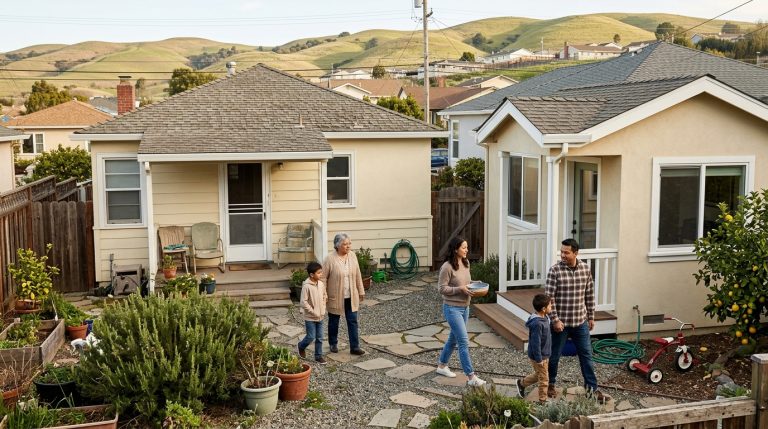
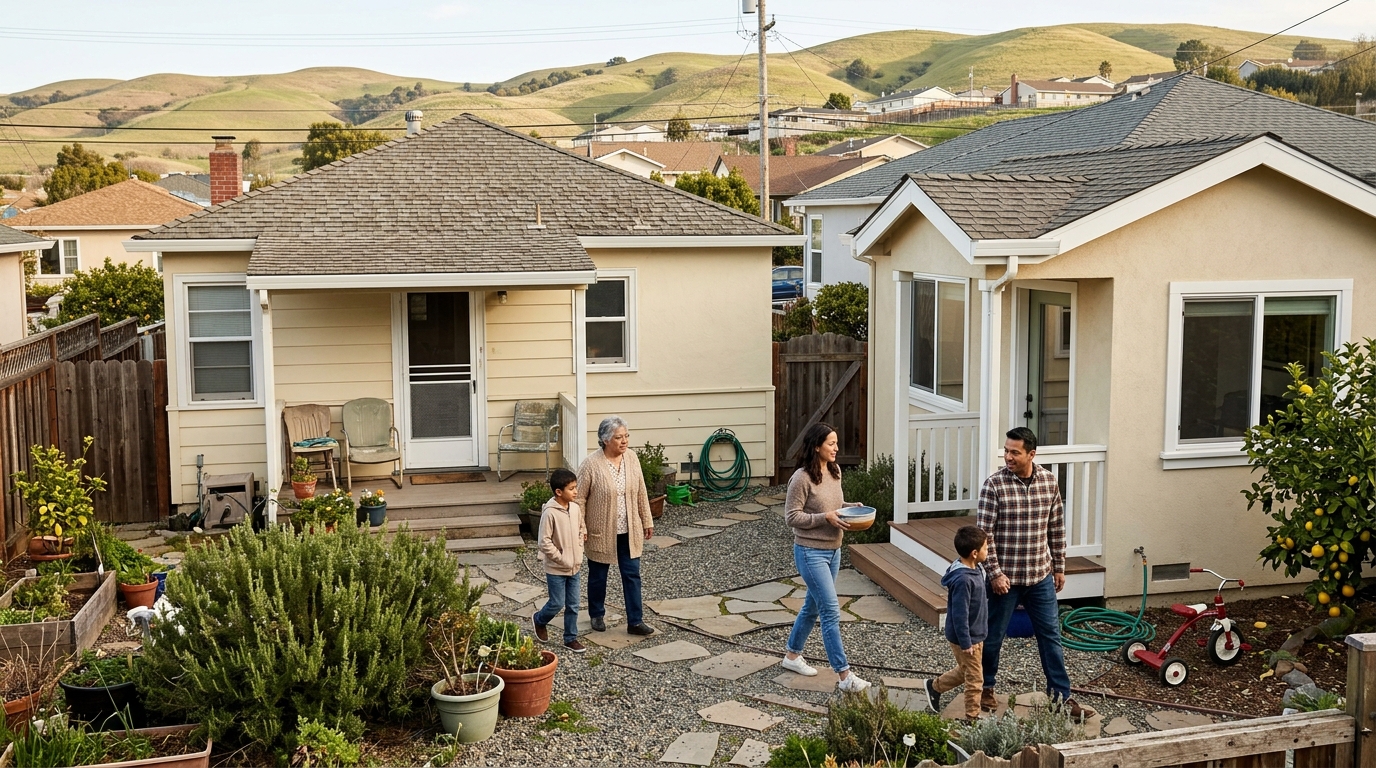
The Vallejo ADU rules 2026 changed on October 8, when the City’s updated accessory dwelling unit ordinance took effect.
Vallejo adopted Ordinance No. 1890 to update Chapter 16.303 of the Municipal Code. The goal is to bring local rules into line with current California laws for accessory dwelling units, or ADUs, and junior accessory dwelling units, known as JADUs.
For homeowners, the change matters because ADUs can create space for relatives, long-term renters, caregivers, or future downsizing. They can also add housing without requiring an entirely new subdivision or apartment complex.
However, an ADU is still a real construction project. Property size, setbacks, utilities, building codes, fire safety, parking, design, and permit requirements can all affect what works on a specific lot.
This guide explains the current Vallejo rules, the difference between ADUs and JADUs, and what homeowners should check before spending money on plans or construction.
What Changed With the Vallejo ADU Rules 2026
The Vallejo City Council adopted the new ordinance in September 2026. It took effect on October 8.
The update changes the City’s local ADU code so it matches current state requirements. California has revised ADU laws several times in recent years, so local ordinances must periodically catch up with those changes.
That does not mean every ADU rule in Vallejo suddenly became new on October 8. Many standards already existed because state law applied even before the City finished updating its local code.
The important change is that Vallejo’s written ordinance now more closely reflects the rules property owners and planners must follow today.
The Ordinance Aligns Vallejo With Current California ADU Law
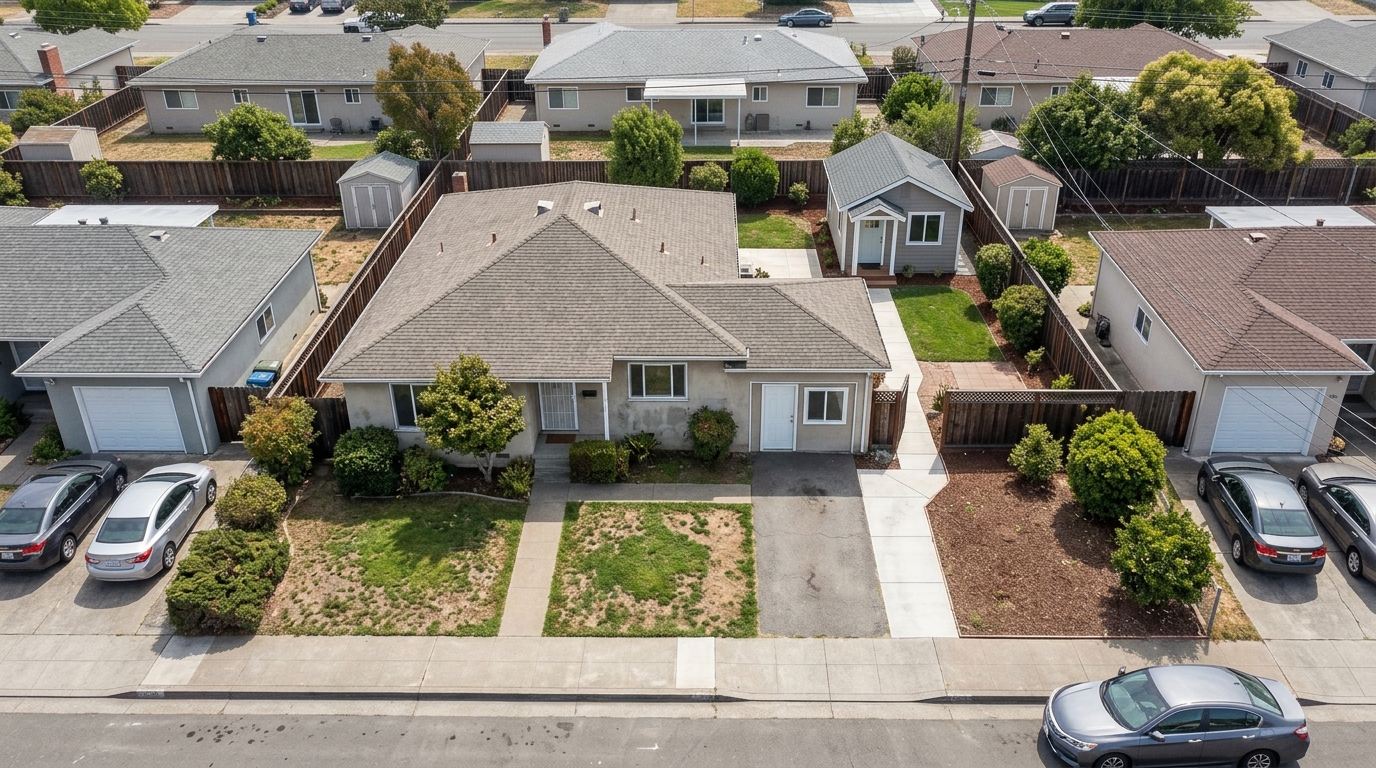
An accessory dwelling unit is a separate home on the same property as a primary residence. It can be detached, attached, or created by converting existing space.
A converted garage is one common example. Another option is a new backyard cottage.
Vallejo’s current ADU guide says standard ADUs may be as large as 1,200 square feet when the applicable rules allow that size. They need their own bathroom, kitchen, sleeping area, and entrance.
A JADU works differently. It is smaller and must be created from space associated with a single-family home.
Some Single-Family Lots Can Support More Than One Accessory Unit
California ADU law now allows more housing combinations than many homeowners realize.
Vallejo’s current guide explains that a qualifying single-family property can potentially include a converted ADU, one JADU, and one newly constructed detached ADU.
That does not mean every backyard can automatically fit three units. The property still needs to meet the standards that apply to each type of unit.
Lot layout matters. Existing buildings, utilities, fire access, easements, slopes, and other site conditions can affect what is practical.
A homeowner should therefore begin with the actual parcel rather than a generic floor plan found online.
Vallejo also recognizes several ADU types. A unit can be detached from the main house, attached as an addition, or converted from legally built existing space.
Multifamily properties can also qualify for ADUs under separate rules. That can include both converted interior areas and detached units.
The larger housing picture connects with other changes happening across Vallejo. Our Mare Island redevelopment guide looks at housing growth on a much larger scale. ADUs work at the opposite end of the spectrum by adding homes one property at a time.
Parking Requirements Have Several Important Exceptions
Parking is one of the first questions homeowners ask about an ADU.
Vallejo’s current guidance generally lists one off-street parking space per ADU. However, California law creates several situations where that space is not required.
For example, an ADU may qualify for a parking exemption when the property sits within a half-mile walking distance of public transit.
Other exemptions can apply in historic districts, when the ADU is created from existing space, or when local parking permits are required but unavailable to the ADU occupant.
A nearby car-share location can also matter under state rules.
Garage conversions receive another important protection. If a homeowner converts or demolishes a garage, carport, or covered parking area as part of an ADU project, the City does not require replacement parking simply because those old spaces disappeared.
Still, a legal parking exemption does not guarantee that parking will feel easy after the project is finished.
Homeowners should think about how residents actually use the property. A household with several drivers may still prefer to keep off-street parking even when the code does not require it.
JADUs Follow Different Rules From Full ADUs
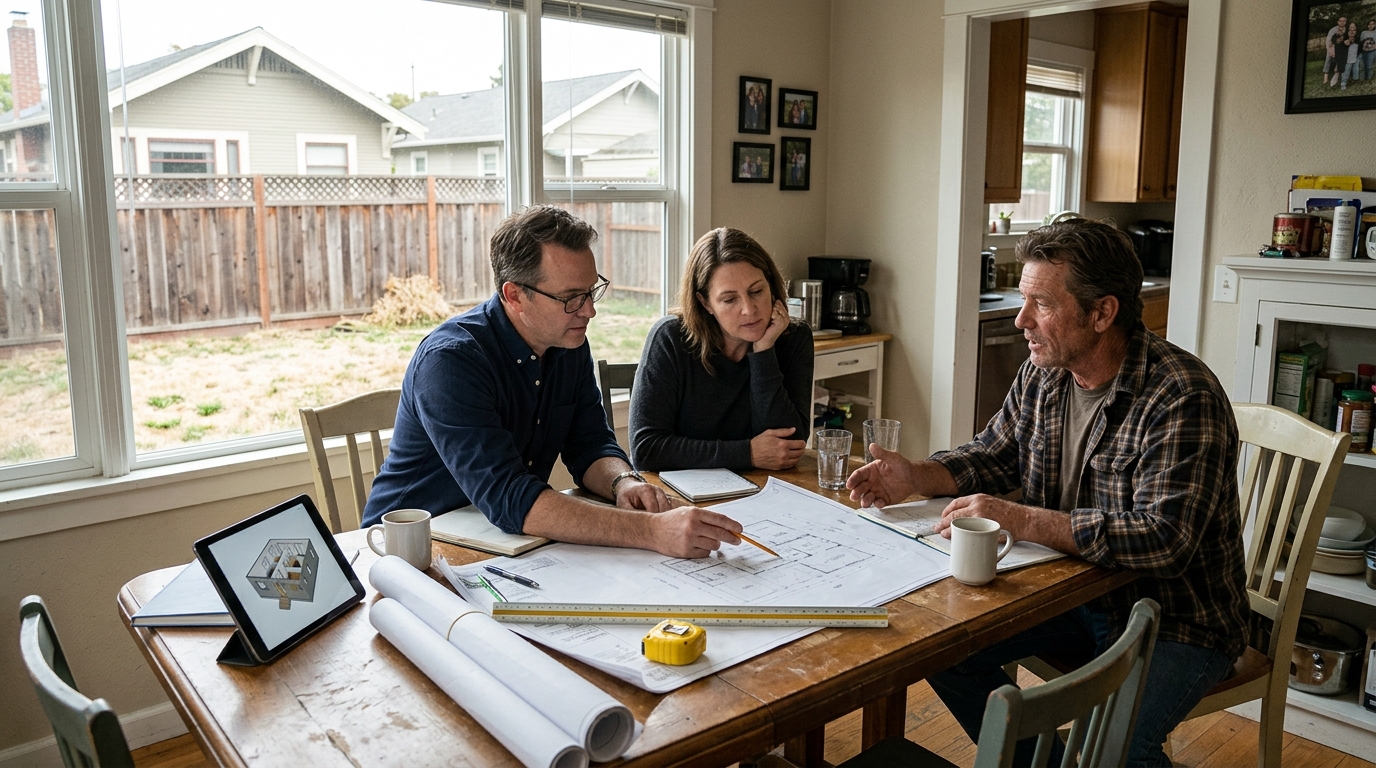
A junior accessory dwelling unit is not simply a smaller detached house.
Vallejo’s guide describes a JADU as a conversion of space within a single-family home or associated attached space. The maximum size is 500 square feet.
A JADU needs an efficiency kitchen. It can have its own bathroom or share facilities with the main home, depending on the design.
Owner-occupancy rules can also differ. The City’s updated ordinance says owner occupancy is not required for standard ADUs.
For JADUs, the requirement depends on the bathroom arrangement. If the JADU shares sanitation facilities with the main home, owner occupancy is required. If it has independent sanitation facilities, the updated ordinance provides different treatment.
Short-Term Rentals Are Not the Purpose of an ADU
Homeowners should not plan an ADU around weekend vacation rentals.
Vallejo’s current rules require ADUs and JADUs to be rented for terms longer than 30 consecutive days.
That means the units are intended to function as housing rather than short-term visitor accommodations.
A homeowner could use an ADU for an adult child, parent, caregiver, or long-term tenant. It may also work as a future home for the property owner while the main house serves another household.
That flexibility is one reason ADUs have become an important part of California housing policy.
They can add homes within existing neighborhoods without requiring a large new development.
At the same time, ADUs will not solve Vallejo’s entire housing challenge. The City is also considering much larger housing and development strategies around Mare Island, downtown, and the waterfront.
Our Vallejo waterfront revitalization guide explains how housing, transportation, infrastructure, public space, and economic development are being considered together in another part of the city.
How to Plan a Vallejo ADU Project Under the 2026 Rules
The easiest mistake is starting with architecture before checking the property.
A beautiful 1,200-square-foot backyard cottage does not help if utility locations, setbacks, easements, or lot conditions make that design unrealistic.
Start with basic property information. Find the parcel number, zoning, lot dimensions, existing structures, and any special conditions affecting the site.
Flood, seismic, fire, and historic requirements can all matter depending on the address.
Then decide what problem the ADU needs to solve. A home for one parent may need a very different layout from a two-bedroom long-term rental.
Build the Project Around the Property, Budget and Intended Use
Vallejo’s ADU guide recommends making an early sketch of the property before hiring a full design team.
Mark the house, garage, property lines, driveway, trees, and other major features.
Then look at realistic access. Think about how the future resident will reach the unit from the street.
Newly constructed ADUs larger than 800 square feet may also face local objective design standards under the updated ordinance.
Those standards can address exterior materials, colors, roof form, and access paths so larger new units relate more closely to the primary home.
Smaller state-protected ADUs receive stronger limits on the local standards a city can use to block construction.
Utilities deserve attention early too. Electricity, gas, sewer, and water upgrades can change both cost and schedule.
A backyard may have enough physical room for an ADU while still requiring expensive utility work.
Permits, Fees and Construction Still Require Careful Planning
An ADU does not avoid the building-permit process.
Homeowners still need plans that meet building, structural, energy, fire, plumbing, electrical, and other applicable codes.
Vallejo’s current guide says ADUs of 800 square feet or less can generally move directly into the building-permit process when they meet the required standards.
Larger projects may need Planning Division review before the building permit application.
California law also requires ministerial review of qualifying ADU applications. A ministerial process means the City applies objective rules rather than requiring a discretionary hearing simply to decide whether officials like the project.
That can make an ADU easier to permit than many other housing projects, but incomplete plans can still create delays.
Homeowners should also budget beyond construction. Design work, permit fees, utility work, soils reports, engineering, site preparation, and financing expenses can all affect the final cost.
Development impact fees receive special treatment. Vallejo’s current guide notes that ADUs below 750 square feet are not charged development impact fees under the applicable rules.
That does not mean a small ADU is completely fee-free. Building, utility, plan-review, and other charges may still apply.
Vallejo ADU rules 2026
Fees can also change from year to year. Vallejo increased some planning and building fees in September 2026, so an older cost worksheet should not be treated as the current price list.
Before hiring a contractor, verify the license through the California Contractors State License Board. Get a detailed written contract and make sure responsibilities for permits, inspections, payments, and change orders are clear.
Do not begin construction because someone says the permit is “almost approved.” Wait for the required authorization.
The Vallejo ADU rules 2026 make October 8 an important date for homeowners considering a second housing unit.
The updated ordinance brings Vallejo’s local code into line with current California ADU law. It also gives property owners a clearer framework for standard ADUs, JADUs, parking, rentals, design, and permitting.
Still, no two properties are identical.
A rule that allows an ADU in principle does not guarantee that the same design works on every lot. Utilities, access, existing structures, site hazards, and building-code requirements can change the final project.
The best first step is therefore not buying a prefab unit or signing a construction contract. Start by confirming what your exact Vallejo property can support.
For the new ordinance, City staff reports, and official project status, review the City of Vallejo ADU Ordinance Update before making a property or construction decision.